
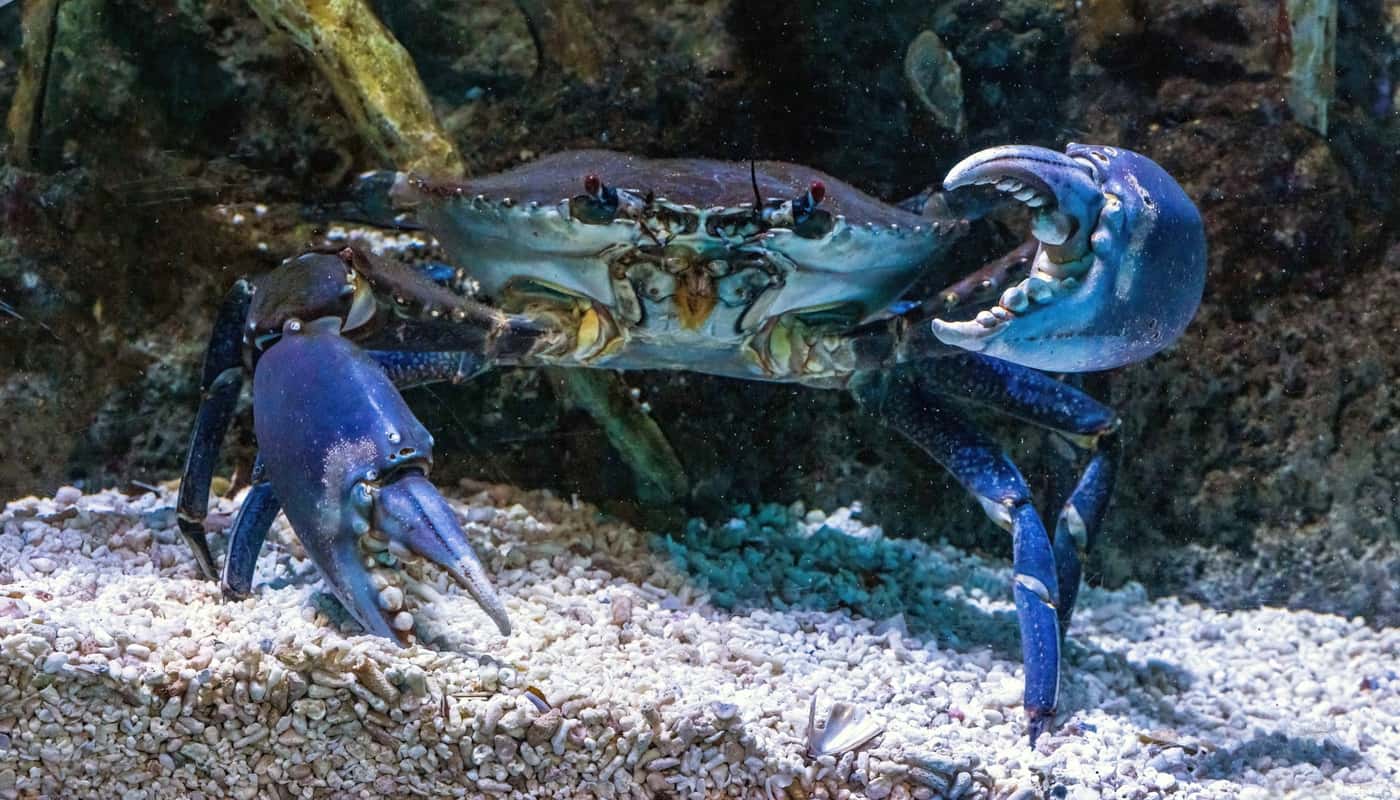
To eat a Maryland steamed crab, you start with a hot, seasoned hard-shell blue crab, work through the shell by hand, and eat only the white, sweet meat inside. The skill that matters most is knowing the crab’s anatomy, and that is easiest to learn at a crab house table or from a short demonstration video.
This guide covers what the state’s own agencies say about the crab itself, how the seasoning fits in, how to handle the food safely, and where people learn the hands-on part. It sticks to what Maryland and federal sources document, and it says plainly where the technique is a matter of practice rather than written rules.
What exactly is a Maryland steamed crab?
A traditional Maryland steamed crab is a hard-shell blue crab, cooked live in steam and heavily coated with seasoning. Visit Maryland describes the experience as a summer must-do: hand picking your own hard crabs at a waterside crab house. The state’s tourism office also lists “traditional Maryland steamed hard-shell crabs” among the offerings at restaurants such as those in Ocean City.
“Hard crab” is a harvest term. According to the Maryland Department of Natural Resources (DNR), crabs are harvested in three forms: hard crabs, peelers (crabs just before they molt) and soft shell crabs (crabs just after they molt). The soft shell crab is a different dish, eaten whole. The steamed crab people mean at a feast is the hard crab.
How do you tell what kind of crab you have?
Knowing your crab helps you understand what you are looking at once it is on the paper. DNR’s Fish Facts page for the blue crab lays out the basics:
- The carapace, the top shell, is olive or bluish-green.
- The front claws are a brilliant blue, with red tips on females.
- Males have a long, slender apron shaped like an inverted “T” on the underside.
- Immature females have a triangular apron, and mature females have a rounded one.
- The apron folds into a groove on the underside of the crab.
Steaming turns the shell red, so the blue claws and the red tips fade from view, but the apron on the underside is still the quickest way to tell the sexes apart.
Why does size matter?
DNR says adult blue crabs can grow up to 9 inches across. The largest Maryland crab on record was a 9-inch male, though DNR surveys have captured crabs of 10 to 11 inches. Crabs reach maturity at 12 to 18 months, and few live longer than 3 years. Males keep molting and growing throughout life, while females stop growing at sexual maturity, after about 21 or 22 molts. A larger crab generally means more to pick, but it also means more shell to work through.
What does the seasoning do?
Maryland steamed crabs are topped with Old Bay, which Visit Maryland calls a traditional seasoning of the Chesapeake region. According to the tourism office, the blend includes crushed pepper, paprika and celery salt, among other spices, and it adds flavor and heat to fresh, piping hot steamed crabs.
A state Department of Natural Resources cookbook page offers a glimpse of the home version. A contributor recalls their father ordering a bushel of crabs, steaming them on the stove in a garage and seasoning them with Old Bay and black pepper. Recipes vary from household to household, which is part of the tradition. For the history of the tin itself, see our piece on Old Bay and its Baltimore origins.
One practical point follows from the seasoning: the spice coats the outside of the shell, so it ends up on your fingers. Keep your hands away from your eyes and face while you work, and have plenty of paper towels or napkins at hand.
How do you eat a steamed crab, step by step?
The documented, sourced parts of the process come first, and the hands-on picking comes after them.
- Start with a live crab that was cooked properly. The FDA says live crabs and lobsters should show some leg movement when selected, and that they spoil rapidly after death. Only live crabs should be selected and prepared for cooking.
- Check that it is cooked through. The FDA says most seafood should reach an internal temperature of 145°F. Without a food thermometer, crab is done when the flesh becomes firm, pearly and opaque.
- Identify the crab. Turn it over and look at the apron, using the shapes described above. This tells you whether you have a male, an immature female or a mature female.
- Season and serve it hot. Old Bay is the usual coating. Steamed crabs are traditionally eaten right away, at the table, while hot.
- Pick by hand, working through the shell. This is the stage where technique counts. The DNR’s cookbook section links to a short video titled “How to pick a crab,” and the hands-on programs listed by Visit Maryland teach the method in person.
- Eat the meat, leave the shell. Crab meat is white and firm. Anything that is not meat, including shell fragments, is discarded.
The steps that involve precise cuts and which internal parts to discard vary by household and crab house, and published rules do not settle them. Crab-house staff and experienced neighbors are usually glad to demonstrate, and that live demonstration is the most reliable way to learn.
What are the most common mistakes?
Eating a crab that was not alive when cooked. Because the FDA notes that crabs spoil rapidly after death, a crab that was already dead before steaming is a food-safety risk, not a matter of taste.
Judging doneness by color alone. The shell turns red in steam, but the FDA’s stated cue for doneness is the flesh: firm, pearly and opaque. When the temperature matters, a food thermometer reading of 145°F is the measure.
Ignoring odor. The FDA’s advice is blunt: if seafood has sour, rancid or fishy odors, raw or cooked, do not eat it.
Rubbing your eyes. Seasoning on shell and fingers can sting. Wash up before touching your face.
Leaving leftovers out. For seafood to be used within two days, the FDA recommends storing it in a clean refrigerator at 40°F or below.
How do you handle crabs safely?
The FDA’s guidance for handling seafood applies to a crab feast as much as to any other meal.
| Situation | FDA guidance |
|---|---|
| Choosing live crabs | Should show some leg movement; they spoil rapidly after death |
| Cooking | Most seafood to an internal temperature of 145°F; crab flesh turns firm, pearly and opaque |
| Refrigerating (use within two days) | A clean refrigerator at 40°F or below |
| After handling raw seafood | Wash hands for at least 20 seconds with soap and warm water |
| Boards, dishes, utensils, counters | Wash with soap and hot water between raw and ready-to-eat foods |
| Off smell | Sour, rancid or fishy odors: do not eat |
Because raw crabs and cooked crabs are handled in the same kitchen or on the same dock at a home feast, the cross-contamination line matters most. Tongs and trays that held live crabs should not carry cooked ones without washing.
When and where do people eat steamed crabs?
Visit Maryland says blue crabs are typically caught from April through October. Several experiences let visitors skip the cooking entirely. According to the tourism office, two charter operators will steam a catch of up to two bushels per trip at Kentmorr Marina. A trotline trip on the Choptank River can end with a local business cooking the crabs “the Maryland way.” A Solomons Island heritage program called “Crew for a Day” teaches seasoning, preparing and picking crabs.
For readers who want to understand the harvest behind the meal, our guide to the blue crab season and the winter dredge survey explains how the state counts crabs each winter. Crabs are also part of the state’s identity, as the roundup of Maryland’s state symbols shows. And Baltimore’s historic food hall, Lexington Market, is another place to taste the local seafood tradition.
What varies by person and place?
Several things differ from table to table:
- The seasoning. Old Bay is the standard, but cooks add black pepper or their own blends.
- The tools. Many tables use mallets and knives, while others use hands alone. Visit Maryland’s pages do not specify equipment, so it comes down to local habit.
- Which parts people eat. Households disagree on what to keep and what to discard, which is why in-person demonstration beats a written rule.
- Where the crab was caught. Crabs from the Chesapeake Bay and its tributaries are the Maryland standard, though prices and availability shift with the season and with the catch.
Learning from someone at the table is also part of the tradition. Most people who grew up picking crabs learned by watching.
The bottom line on your first crab feast
Eating a steamed crab is learned by doing, but the groundwork is simple: choose a crab that was alive when cooked, make sure it is cooked through, read the apron to know what you have, expect the Old Bay, and keep your hands clean. Then take a seat at a table with someone patient and start picking. Your first crab will be slow, and that is normal.
This article is general information about food and culture, not health or food-safety advice for any individual. Check current guidance from the FDA and Maryland agencies for specific situations.
Sources: Maryland Department of Natural Resources; U.S. Food and Drug Administration; Visit Maryland