
The wild horses of Assateague Island are among the best-known animals on the Maryland coast, and the herd is larger than it was two years ago. As of March 2026, the National Park Service counted 83 horses in the Maryland district, and visitors are prohibited from coming within 40 feet of any of them.
This guide covers where the horses came from, how their numbers are managed, where to look for them and what the park asks of visitors.
How many wild horses live on Assateague in Maryland?
According to the National Park Service’s 2026 annual horse population update, the March 2026 census counted 83 horses in the Maryland herd, made up of 34 stallions and 49 mares. That compares with 79 horses in March 2025 and 73 in March 2024.
The census figures fit together in a simple way. Illustrative arithmetic: 34 stallions plus 49 mares equals 83 horses. The herd grew by 4 animals between March 2025 and March 2026 and by 6 the year before, for a total of 10 over two years. Ten additional horses on a base of 73 is a gain of roughly 14 percent over the two-year span.
The March count is not a full picture of the year. The park service said most foals had not yet been born by that census, and that “several foals are expected this season.” It also noted that most winter deaths had already occurred and been documented by the end of March, which is why the March count is used for year-to-year comparison.
Quick facts
| Item | Detail |
|---|---|
| Herd count, March 2026 | 83 horses (34 stallions, 49 mares) |
| Herd count, March 2025 | 79 horses |
| Herd count, March 2024 | 73 horses |
| Management goal range | 80 to 100 horses |
| Census frequency | Six times a year |
| Required viewing distance | At least 40 feet |
| Leash length for pets | No longer than 6 feet |
Where did the horses come from?
The park service describes the Assateague horses as feral, meaning descendants of domestic animals that reverted to a wild state. The popular legend that they swam ashore from a shipwreck is unconfirmed, according to the National Park Service. Its most plausible explanation is that mainland owners brought horses to barrier islands in the late 17th century to avoid fencing laws and livestock taxes.
The park service’s resource brief says domestic horses were on the island by 1669, when settlers put livestock there, and that their descendants have lived wild on Assateague for more than 300 years.
The modern Maryland herd is tied to the creation of the national seashore. The Maryland portion became a national seashore in 1965, when 10 horses lived within its boundaries, according to the park service. The seashore acquired ownership of 28 horses in 1968, and scientific study of the herd began in 1975.
Why are there two herds?
Assateague is a barrier island about 37 miles long, shared by Maryland and Virginia. The horses form two herds separated by a fence at the state line.
The National Park Service manages the Maryland herd. The Virginia herd is managed by the Chincoteague Volunteer Fire Company under a U.S. Fish and Wildlife Service permit that limits it to about 150 adult animals. Each summer, on the last Wednesday of July, the Virginia herd is rounded up and swum to Chincoteague Island, and most foals are auctioned the next day to benefit the fire department. That event, known as Pony Penning, applies only to the Virginia herd. The Maryland horses are not rounded up or sold.
How is the Maryland herd kept at its current size?
Left alone, the herd grew quickly. The park service says early population growth ran about 10 to 15 percent per year, which raised concerns about both horse health and the effect of heavy grazing on the island. Horses prefer saltmarsh cordgrass, American beachgrass and three-square sedge, and the park service reports that heavy grazing reduced the abundance, density, size and diversity of plants in wetland and dune habitats.
Managers ruled out removing or selling horses as a population-control method. Instead, a fertility control program began in the 1980s and 1990s:
- 1986: A steroid-based approach was tested and proved ineffective.
- 1988: Trials began of an immunocontraceptive known as PZP, delivered by remote dart so that no horse has to be captured.
- 1994: A long-term fertility control program to reduce the herd began, according to the National Park Service’s population updates.
- 2006: The population goal was lowered from the original 150 animals to a range of 80 to 100.
- 2016: The last mare to be contracepted was a two-year-old, according to the park service. The herd has since been within its goal range.
The park service also says that a smaller herd may ultimately be needed to balance protecting the horses with protecting their island home. It manages the herd as a wildlife population because the horses are an introduced species with no natural predators.
Do the horses live longer because of the program?
According to the park service, yes. Before contraception, few mares lived beyond their late teens. Now many live into their late twenties or early thirties. Scientists track every horse through surveys six times a year over an area of about 21 miles, identifying each animal by color, sex, markings and scars and recording age structure, maternal ancestry, the male-to-female ratio, mortality and foaling frequency.
Where can you see the horses?
The Maryland horses roam freely across the entire Maryland district, from the north end of the island to the fence at the Virginia line. The park service suggests checking marshes and bayside areas, where the horses feed on saltmarsh cordgrass, as well as beaches and forests. Many can be seen along Bayberry Drive and in parking lots.
Their habits change with the seasons:
- Summer: The horses tend to stay in developed areas such as campgrounds and the beachfront, possibly to escape biting flies.
- Winter: They spread out along the island.
Horses can be seen at any time of day, though daylight is best. Viewing is possible by car, on foot or by bike. The paved, flat bike trail along Bayberry Drive is wheelchair accessible, according to the National Park Service. Park entrance fees apply, and no reservations are required to visit. The seashore is open year-round, and the park service warns that mosquitoes, biting flies, gnats and ticks are abundant from spring through autumn, so repellent or protective clothing is recommended.
What are the rules for visiting around the horses?
The park service is direct: “It is prohibited to come within 40 feet of a horse.” Other guidance for visitors includes:
- Do not touch or feed the horses. Human food can make them sick, and horses that beg at the road are often hit by cars.
- Yield if they approach. If horses move toward you, move out of their way and let them pass.
- Expect kicking and biting. The park service says visitors are kicked, bitten and knocked down every year from getting too close.
- Drive carefully. Slow below the posted limit when passing horses, keep windows up if a horse approaches and take extra care after dark, because horses’ eyes do not reflect light and they are hard to see.
- Give mares and foals extra room. Expectant mares and new foals should be given plenty of space to reduce stress and disturbance.
- Keep pets leashed. Pets must be on a leash no longer than 6 feet at all times, and they are banned from several areas, including backcountry campsites, nature trails and the lifeguard-protected beach.
The park service sums up the principle this way: “Give the horses the space they need to be wild.”
Planning a fall or winter trip
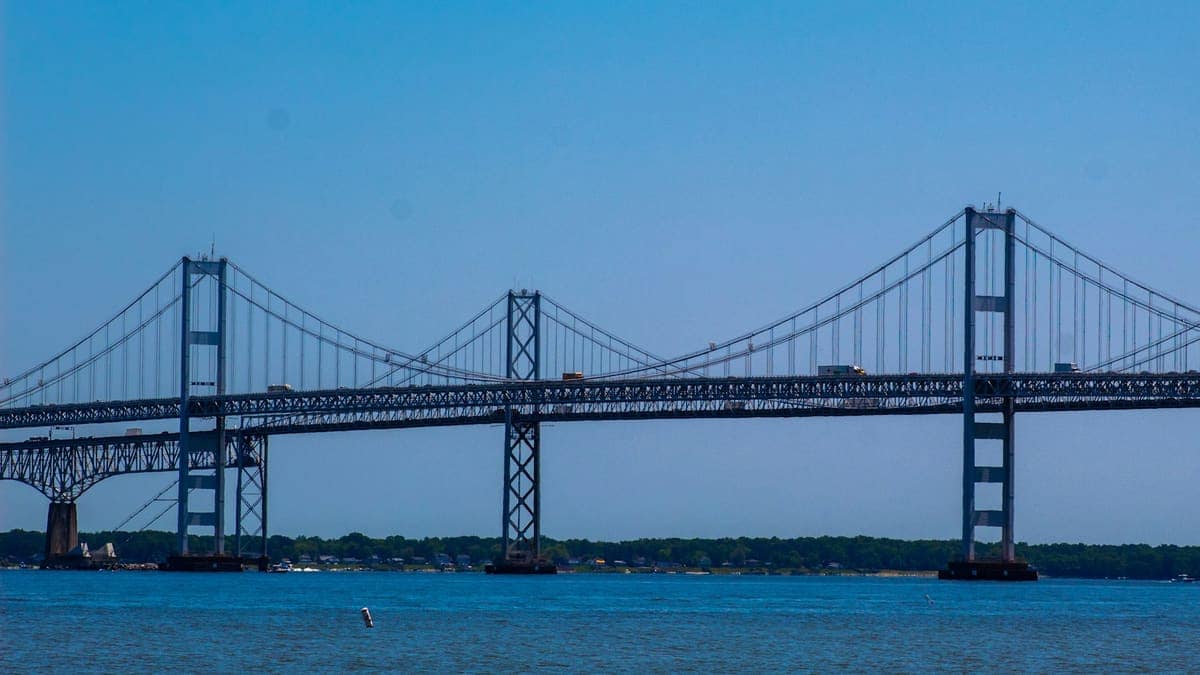
Because the seashore is open year-round and the horses spread out along the island in winter, an off-season visit can mean fewer biting insects but also more searching. Pairing a trip with other Eastern Shore stops is common for Maryland travelers; readers heading east may want to review what to know about the Chesapeake Bay Bridge before they go. For other seasonal outings, see our guide to Maryland fall foliage, and for more on the state’s identity, see Maryland’s state symbols.
A herd managed to stay wild
Assateague’s Maryland horses are a small herd by design: 83 animals in March 2026, inside a goal range of 80 to 100 that managers set in 2006. The rules for visitors are simple and firm, with 40 feet as the minimum distance, and they exist to protect both people and animals. The next March census will show whether the herd stays within its range.
This article is general information based on published National Park Service material. Park conditions, fees and rules can change, so check with Assateague Island National Seashore before visiting.
Sources: National Park Service