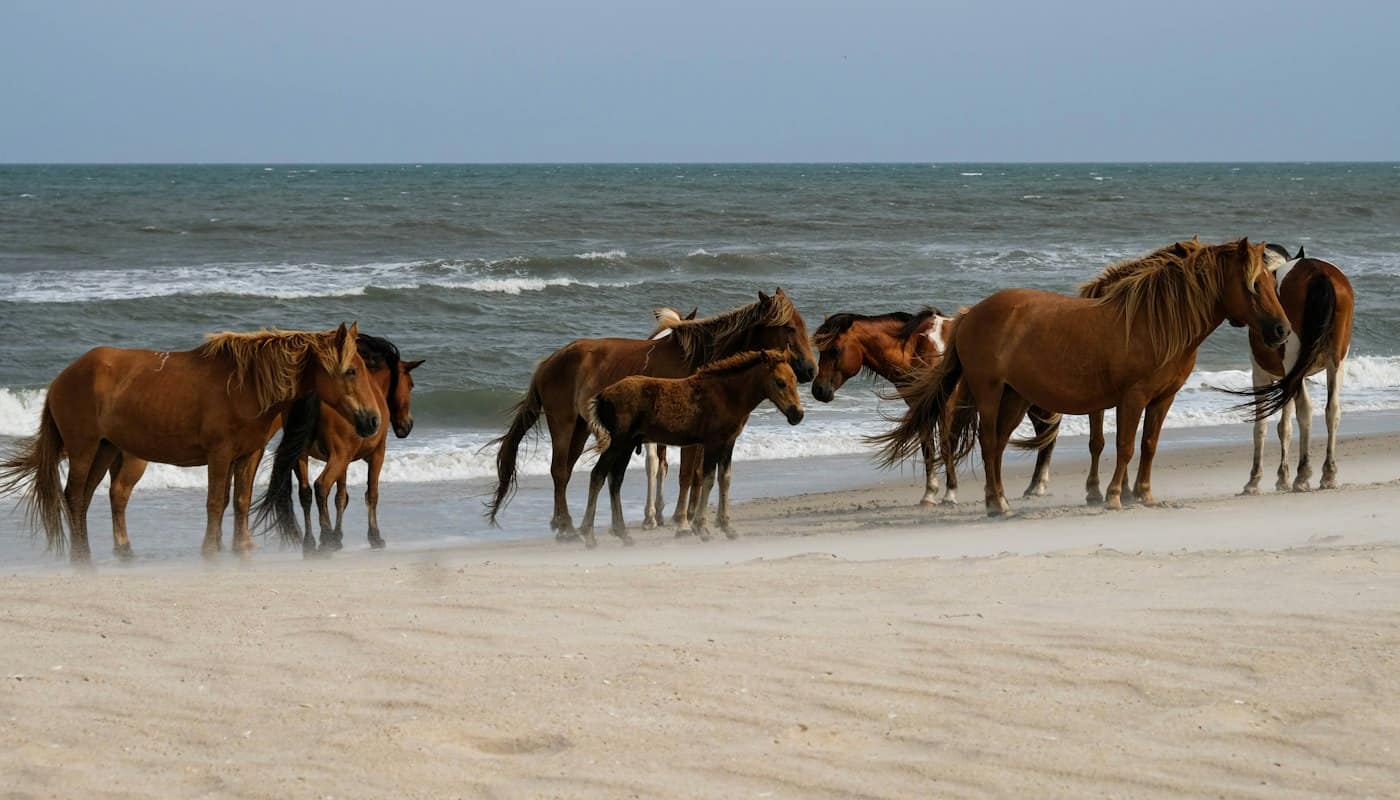
Visitors to Assateague Island National Seashore can see wild horses year-round, but the National Park Service says to stay more than 40 feet away, and anyone seen within that distance may face a minimum fine of $100. Vehicle entry to the Maryland district costs $25 for seven days, and the horses will take any food left unattended.
This guide covers what a visit involves: the rules that protect people and horses, what the park charges, how camping works and the mistakes that most often cause trouble. For the herd’s size, history and population management, see our earlier look at Assateague’s wild horses.
How close can you get to Assateague’s wild horses?
The park’s rule is stated plainly: stay more than 40 feet from wild horses. According to the National Park Service’s wildlife page, that is about one bus-length, and it applies to all the horses a visitor will meet in the park. The campground regulations add that visitors observed at 40 feet or closer may face a minimum fine of $100.
The same pages say touching, feeding or enticing the horses is illegal. Visitors are told not to call, whistle, click or make noise to attract animals, and to use a zoom or telephoto lens rather than stepping closer. In a group, everyone is expected to keep the same distance, and the park suggests reminding others of the rules if they crowd an animal.
If a horse walks toward you, the guidance is to back away. The park’s wildlife advice lists bites, scratches, bruises, infectious diseases and, in rare cases, severe injury or death among the risks to visitors.
Quick facts for planning a visit
| Item | Detail |
|---|---|
| Season | Open year-round |
| Minimum distance from horses | More than 40 feet |
| Minimum fine for closer approach | $100 |
| Seals (winter, on beaches) | Keep at least 150 feet away |
| Pet leash length | No longer than 6 feet |
| Camping check-in / check-out | 12:00 noon / 11:00 a.m. |
| Camping quiet hours | 10:00 p.m. to 6:00 a.m. |
| Park phone | 410-641-1441 |
What does it cost to visit Assateague?
According to the National Park Service’s fee page, the Maryland district charges by how you arrive. Walking or biking in is free. A private vehicle costs $25 and covers seven days. A motorcycle costs $20 for seven days. Visitors aged 16 and older who enter by other means, such as a taxi or limousine, pay $15 each for seven days, and a family traveling together pays no more than the vehicle fee.
An annual park pass costs $45 and is valid for one year from the date of purchase. The page says the pass works in both the Maryland and Virginia districts, including Chincoteague National Wildlife Refuge, and is available to U.S. citizens and residents.
Worked example: when does the annual pass pay off?
Illustrative arithmetic: two separate seven-day vehicle entries cost $25 plus $25, or $50. The annual pass costs $45, so it is cheaper from the second visit onward. A single trip is cheaper at the vehicle rate, since $25 is less than $45.
The park service also lists fee-free days for 2026 for U.S. citizens and residents. The remaining date on its list is November 11, which has already passed, so no further fee-free days are listed for this year. Other fees, such as reservation fees, can still apply on those dates, and fees can change, so confirm with the park before traveling.
Where do the horses go, and when is the best time to look?
The horses roam the Maryland district rather than staying in one place. Their habits shift by season, which matters for anyone hoping to see them. Our earlier guide notes, citing the park service, that horses tend to gather near campgrounds and the beachfront in summer, possibly to escape biting flies, and spread out along the island in winter.
Seasons also shape the visitor experience. The National Park Service says summers at the seashore are hot and humid, while winters are often cold, damp and windy, and it rarely snows. Mosquitoes, biting flies, gnats and ticks are common from spring through autumn, so the park recommends insect repellent or protective clothing. A fall or winter trip may mean fewer insects but a longer search for the animals.
Winter brings a different wildlife rule. According to the park’s wildlife page, seals pass through beach areas in winter, and visitors should stay at least 150 feet away, about three bus-lengths.
How does camping work at Assateague?
Camping puts visitors in close contact with the horses, so the campground rules are detailed. According to the National Park Service’s campground regulations:
- Check-in is at 12:00 noon, and campers register at the Ranger Station before setting up. One member of the party must be 18 or older.
- Check-out is at 11:00 a.m. Items left after that time are considered abandoned, and failing to leave on time may bring law enforcement action or a fine. The page gives no dollar amount for that fine.
- Stay limits are 14 consecutive days and 28 cumulative days per season.
- Quiet hours run from 10:00 p.m. to 6:00 a.m. Generators and idling vehicles used to charge batteries are prohibited during those hours. Generators are banned around the clock in Bayside Loop B and in the oceanside walk-in and group sites.
- Campfires are allowed only in an NPS fire ring or a privately owned, self-contained grill. Beach fires are allowed only below the high tide line and not in the lifeguard beach area. Fires must be put out completely with water, not buried in sand.
- Firewood must be bought within 50 miles of the park or be downed and dead wood.
Campers should also place tents and equipment within 30 feet of the fire ring, according to the same page.
Why does food storage matter so much?
Food is the leading reason horses get close to people, and the park treats it as a safety issue for both sides. The campground rules require all food and drinks to be kept in a hard-sided container, such as a vehicle, a locked cooler or latched storage, when not in use. Food that is being used must be closely guarded. Unattended food and unlocked coolers may be searched and confiscated.
The park’s basic visitor information says wild horses and gulls will take unattended food, and advises storing it in a car or sealed container. The same rule applies on a day trip: a picnic left on a beach blanket is an invitation.
The National Park Service says feeding or petting the horses is harmful to visitors and animals alike. Human food can make horses sick, and horses that beg at the road are often hit and killed by cars. The wildlife page lists euthanasia among the risks to wildlife when animals become aggressive, which is one reason the rules matter for the horses themselves.
What common mistakes get visitors in trouble?
Several habits come up again and again in the park’s guidance:
- Giving horses water. The wildlife page says turning on water for horses is one of the top ways visitors get hurt. Visitors are told not to give horses water at all.
- Feeding “just a little.” Even grass from the park is not allowed as a treat.
- Opening trunks or coolers near horses. Horses are drawn to vehicles and food, so food should stay put away.
- Crowding for a photograph. A telephoto lens is the park’s answer to a closer shot.
- Assuming the horses are tame. Visitors are kicked, bitten and knocked down every year from getting too close, according to the park service.
- Bringing a dog without checking the rules. Pets must be on a leash no longer than 6 feet, and they are prohibited on the lifeguarded beach in season, in backcountry campsites and on nature trails.
Is there a difference between the Maryland and Virginia horses?
Yes. The island is shared by two states, and the herds are managed by different organizations. The National Park Service manages the Maryland herd. The Chincoteague Volunteer Fire Company owns and manages the Virginia herd, which grazes on Chincoteague National Wildlife Refuge under a U.S. Fish and Wildlife Service permit.
Pony Penning is a Virginia event. On the last Wednesday of July, the Virginia herd is rounded up and swum to Chincoteague Island, and most young foals are auctioned the next day to benefit the fire company. Visitors seeking exact dates should check with the fire company or the Chincoteague Chamber of Commerce, according to the park service. The Maryland horses are not part of that event.
The park service describes the horses as feral, descended from domestic animals that reverted to a wild state. It says the popular shipwreck story has no records confirming it, and that the more plausible explanation is that mainland owners brought horses to barrier islands in the late 17th century to avoid fencing laws and livestock taxes.
Getting there and what else to see
Assateague lies on the Atlantic side of the Eastern Shore, so many Maryland travelers cross the bay to reach it. Readers planning the drive may want to review what to know about the Chesapeake Bay Bridge. Those who prefer inland trails can compare Maryland’s state parks for hiking, and autumn visitors may want the fall foliage guide.
For practical comfort, the park service recommends sturdy hiking shoes for long sand walks and hard-soled water shoes or sandals for wading. Public water fountains are at the Barrier Island Visitor Center and North Beach Pavilion, and bottled water and snacks are sometimes sold seasonally at the Beach Hut at North Beach and at Assateague Outfitters on Bayside Drive. Visitor centers, most nature trails, bathhouses and wayside exhibits are accessible, according to the park.
A short checklist before you go
A good Assateague trip comes down to a few habits: keep more than 40 feet from every horse, keep food locked away, leash pets at 6 feet or less and plan for insects outside winter. Fees and rules can change, and some of the park’s wildlife guidance has not been updated in several years, so call 410-641-1441 or check the park’s current alerts before leaving home.
This article is general information based on published National Park Service material. Park rules, fees and conditions can change, so confirm with Assateague Island National Seashore before visiting.
Sources: National Park Service