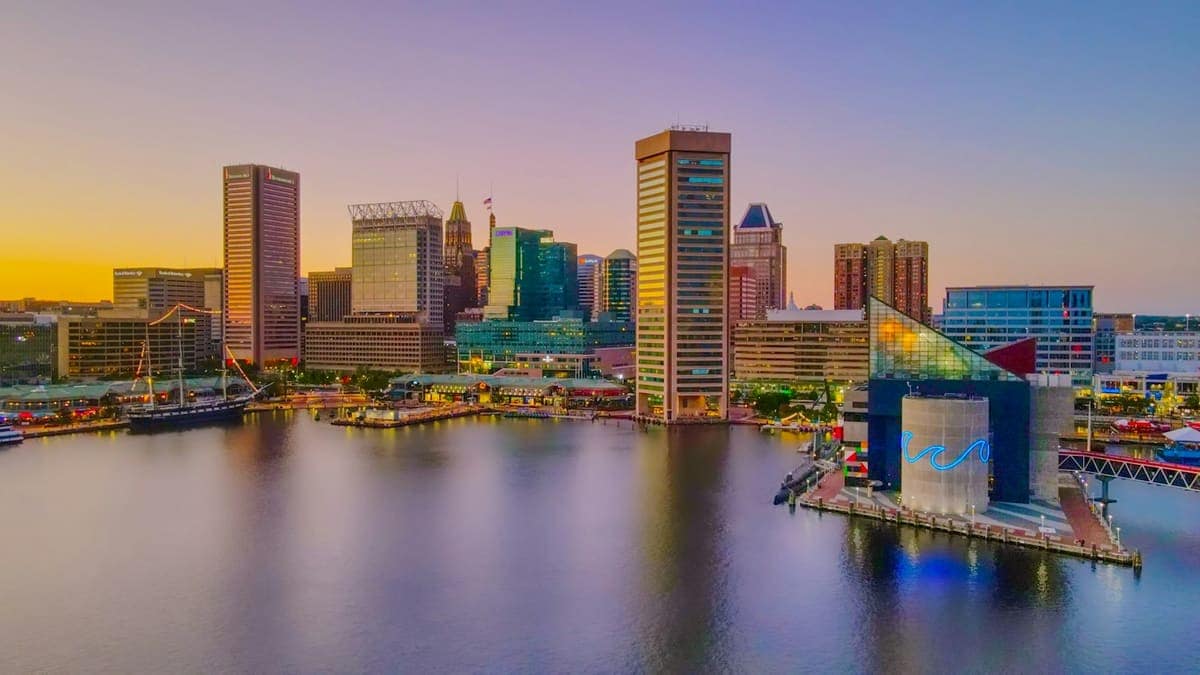
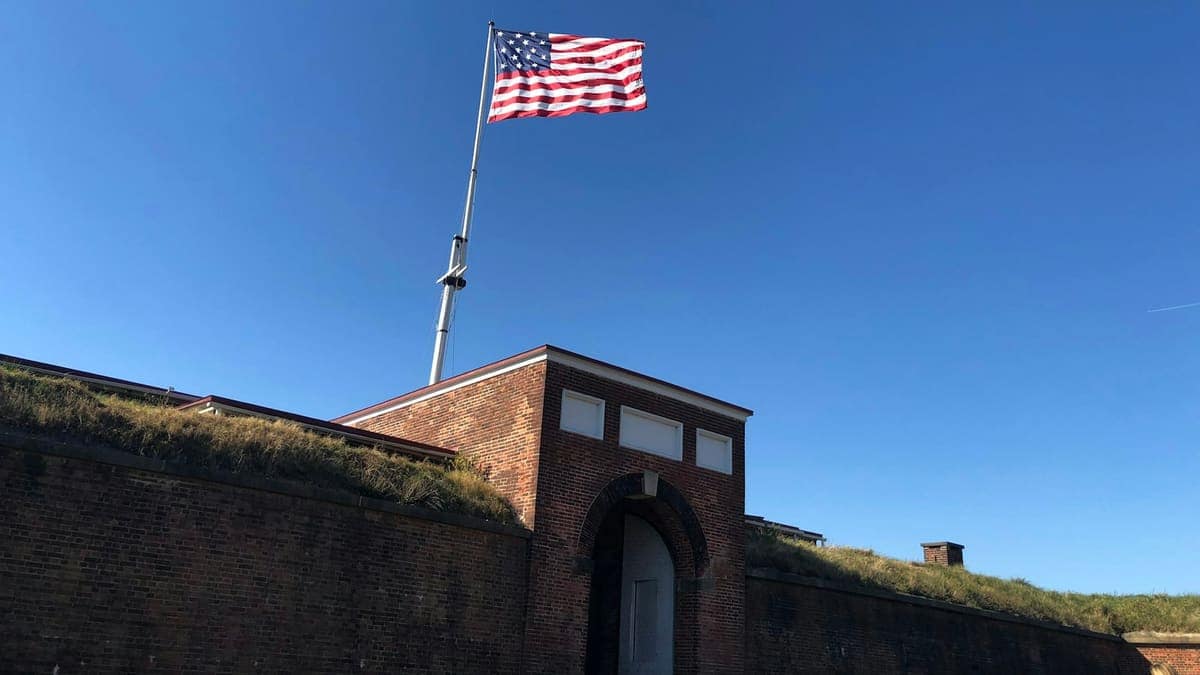
Few places in Baltimore carry as much national meaning as Fort McHenry. The star-shaped fort on the harbor is where, in September 1814, a lawyer watching a battle from a ship wrote the poem that became the national anthem.
What happened at Fort McHenry in 1814?
The fort’s defense of Baltimore during the Battle of Baltimore on September 13 and 14, 1814, inspired Francis Scott Key to write “The Star-Spangled Banner.” Key stood on the deck of an American truce ship and watched Britain’s bombardment of the fort, which lasted about twenty-five hours. On September 14, he saw the large garrison flag raised over the ramparts, a sight that for him symbolized bravery and perseverance.
Who made the flag?
The commander of the fort, George Armistead, wanted a flag large enough that the British would have no difficulty seeing it from a distance. The flag he received measured 42 feet by 30 feet and was made by Mary Pickersgill.
When did the song become the national anthem?
Key’s song was designated as the national anthem of the United States in 1931.
What is Fort McHenry today?
Since 1933, the fort has been operated by the National Park Service. In 1939 Congress designated it a National Monument and Historic Shrine, and it is described as the only official historic shrine in the country.
At a glance
| Detail | Fact |
|---|---|
| Battle | Battle of Baltimore, September 13-14, 1814 |
| Writer of the poem | Francis Scott Key |
| Fort commander | George Armistead |
| Flag size | 42 by 30 feet, made by Mary Pickersgill |
| Anthem designation | 1931 |
| Park Service operation | Since 1933 |
Visiting the fort
The fort sits on Baltimore’s harbor and is run as a national park site, so visitors should check current hours, events and any entry arrangements with the National Park Service before they go. Getting around the city is covered in our guide to Baltimore’s transit services.
Why the story endures
The anthem began as a poem written after a night of bombardment, and it is tied to a specific place. That connection between a local site and a national symbol is why the fort remains a regular stop for visitors to Baltimore.
This article is a general history based on National Park Service material and published accounts. Visitor information changes, so check with the National Park Service.
Photo: Joshua Woods on Unsplash.
Sources: National Park Service; National Parks Conservation Association; State Symbols USA